
Kusa Jataka
Kusa Jataka
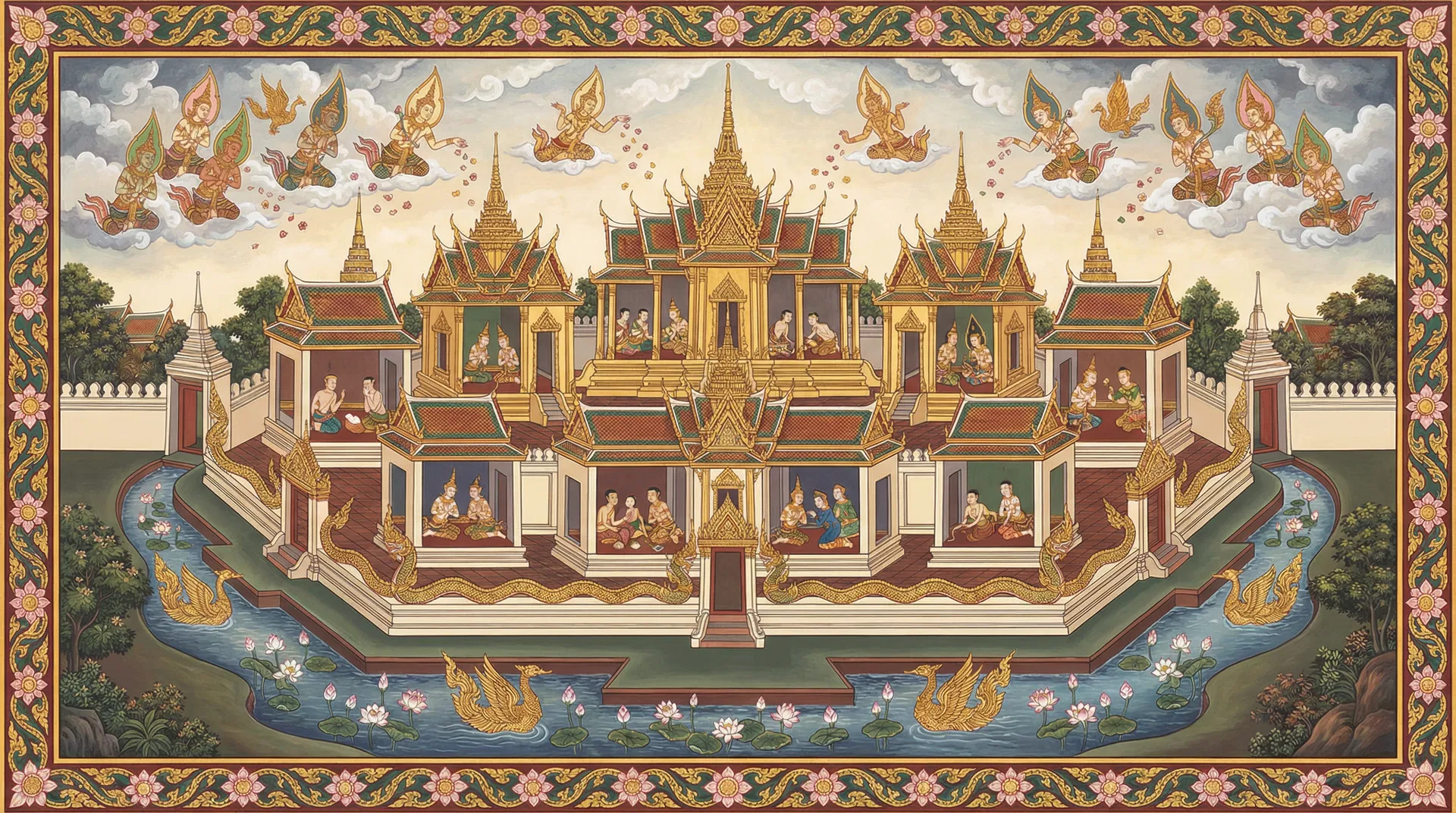
In the verdant kingdom of Videha, there lived a king named Kusa, a monarch of great virtue and a devoted husband to his beloved queen, Pabhavati. Their love was the stuff of legends, a radiant beacon of marital bliss that illuminated the entire court. However, even the brightest lights can cast shadows, and their happiness was destined to be tested by the capricious winds of fate and the subtle poison of gossip.
One day, a cunning and envious Brahman, harboring a secret desire for the queen’s affection and the kingdom’s power, began to spread insidious rumors. He whispered lies about Pabhavati’s fidelity, planting seeds of doubt in the minds of the king and his courtiers. He spoke of secret meetings, of stolen glances, of words meant only for a lover’s ear. The Brahman’s venomous words, though baseless, began to find fertile ground in the king's heart, a heart that, despite its love, was susceptible to the whispers of suspicion.
King Kusa, torn between his deep love for his queen and the growing unease planted by the Brahman’s deceit, was plunged into a state of profound anguish. He could not bear the thought of his beloved queen being unfaithful, yet he could not dismiss the persistent doubts that gnawed at him. In his turmoil, he made a rash decision. He ordered his queen to be banished from the palace, to be taken to a remote and desolate forest, far from his sight and his heart.
Queen Pabhavati, heartbroken and bewildered by this cruel decree, was forced to leave the opulent palace, the kingdom she loved, and the husband she adored. She was taken to a secluded hermitage, where she lived a life of quiet sorrow and dignified solitude. Though devastated, she never uttered a word of complaint or blame against the king. Her heart remained steadfast, her love unwavering, even in the face of such injustice.
Meanwhile, King Kusa found no peace. The silence of the palace echoed with the absence of his queen. The rumors, once a source of torment, now seemed like hollow echoes of his own insecurity. He realized, with a crushing weight of regret, that he had acted on suspicion rather than truth. His heart ached with longing for Pabhavati, and the kingdom, once vibrant, seemed dull and lifeless without her presence.
Driven by remorse and a desperate need for redemption, King Kusa, disguised as a wandering ascetic, embarked on a perilous journey to find his banished queen. He endured hardships, faced dangers, and traveled tirelessly, his only hope being to seek forgiveness and reclaim his lost love. He journeyed through dense forests, crossed raging rivers, and climbed treacherous mountains, his spirit fueled by the memory of Pabhavati’s love and the pain of his own folly.
After many arduous months, King Kusa, weary and humbled, finally stumbled upon the secluded hermitage where Pabhavati resided. He saw her from a distance, a figure of grace and resilience, tending to her simple dwelling. His heart swelled with a mixture of joy and shame. He approached her, his voice thick with emotion, and confessed his deep regret. He told her of the Brahman’s deceit and how his own doubts had led him to banish her.
Queen Pabhavati, though deeply wounded by his actions, saw the sincerity in his eyes and the genuine remorse in his heart. Her love, which had endured the fires of separation and injustice, remained. She forgave him, not because it was easy, but because their bond was forged in truth and enduring affection. Their reunion was a testament to the strength of their love, a love that had weathered the storm of betrayal and emerged even stronger.
Together, they returned to the kingdom of Videha. King Kusa, having learned the devastating consequences of succumbing to suspicion and gossip, ruled with newfound wisdom and a deep appreciation for truth and trust. The Brahman, exposed for his treachery, was banished from the kingdom, his lies unable to destroy the love that had proven itself invincible. The story of King Kusa and Queen Pabhavati became a timeless tale, a reminder that true love, built on a foundation of trust and understanding, can overcome even the darkest of trials.
— In-Article Ad —
💡Moral of the Story
Trust and truth are the cornerstones of any strong relationship. Succumbing to suspicion and gossip can lead to devastating regrets. True love endures and forgives.
Perfection: Generosity (Dāna), Virtue (Sīla), Renunciation (Nekkhamma), Wisdom (Paññā), Energy (Viriya), Patience (Khanti), Truthfulness (Sacca), Resolution (Adhiṭṭhāna), Loving-kindness (Mettā), Equanimity (Upekkhā)
— Ad Space (728x90) —
More Jataka Tales You May Enjoy
166DukanipātaMūga-pakka Jātaka
Mūga-pakka JātakaIn the heart of a lush, vibrant jungle, where ancient trees reached for the heavens...
💡 True wisdom and leadership can manifest in many forms, and understanding transcends spoken words. Trust and keen observation are vital in interpreting silent guidance.
 19Ekanipāta
The Bodhisatta as a Lion
The Bodhisatta as a LionIn the heart of a vast, sun-baked desert, where sand dunes stretched as far ...
💡 True leadership lies in selfless sacrifice for the well-being of subjects, bringing immeasurable blessings.
16EkanipātaThe Monkey King's Courage
The Monkey King's CourageIn the heart of a verdant jungle, teeming with life and vibrant with the ch...
💡 True courage lies in facing fear and acting for the protection of others, regardless of the odds.
 463Ekādasanipāta
Sasa Jātaka
Sasa JātakaIn a time long past, when the world was younger and the forests more ancient, there lived...
💡 The highest form of generosity is the selfless offering of one's own life for the benefit of others. Such acts of supreme compassion leave an indelible mark on the world and inspire countless beings.
 294Tikanipāta
Sambhava Jātaka
The Tale of the Bodhisatta's ReturnIn the verdant kingdom of Sāketā, a wise and just king named Mahā...
💡 True renunciation is not about escaping one's responsibilities, but about fulfilling them with detachment and using one's position to benefit others. The legacy of a virtuous life is seen in the actions of those who follow.
 303Catukkanipāta
Maha-Ummagga Jataka
Maha-Ummagga JatakaIn the magnificent city of Kampilla, ruled by King Vessantara, the land flourishe...
💡 True wisdom lies in understanding the deeper essence and interconnectedness of things, rather than just intellectual knowledge or superficial observation. Humility and empathy are key to profound understanding.
— Multiplex Ad —